
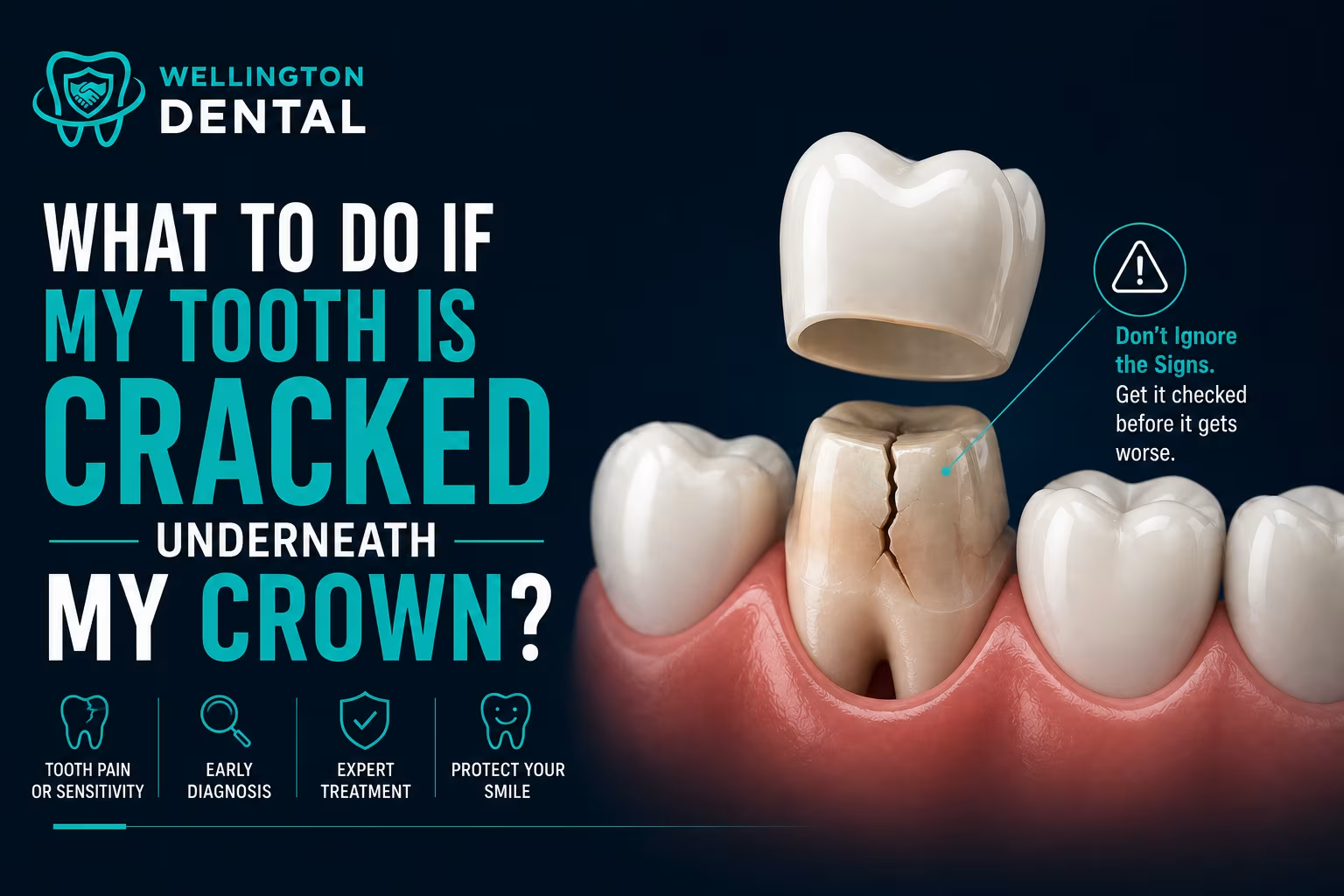
Finding out you have a cracked tooth under a crown can be a frustrating and confusing experience. After all, a dental crown is designed to protect a weakened tooth, so the idea of damage occurring beneath that protective shell feels like a betrayal of the dental work you’ve already invested in.
However, a tooth under a crown is still a natural tooth, and like any other part of your body, it remains susceptible to injury, decay, and the natural wear and tear of time. If you suspect a fractured tooth under a crown, it is vital to act quickly to prevent further complications like infection or total tooth loss.
In this guide, we will explore the causes, the tell-tale signs, and exactly what steps you should take if you believe your tooth is compromised.
What Does It Mean to Have a Cracked Tooth Under a Crown?
A dental crown acts as a "cap" that covers the entire visible portion of a tooth. While the porcelain or metal of the crown itself is incredibly durable, the natural tooth under a crown is still vulnerable. A crack can develop in the tooth structure for several reasons, ranging from sudden trauma to long-term pressure.
Because the crack is hidden beneath the restoration, it is often invisible to the naked eye. This makes it a "silent" problem until the damage reaches the sensitive pulp or the root.
Common Symptoms of a Cracked Tooth Under a Crown
One of the biggest challenges with a broken tooth under crown is that you can’t see the damage. Instead, you have to rely on what you feel. The symptoms of a cracked tooth under a crown can be intermittent, making them easy to ignore at first.
Keep an eye out for these red flags:
-
Sharp Pain When Biting: If you feel a sharp "zing" or sudden pain when you bite down or release your bite, it’s a classic sign of a fracture. The pressure causes the crack to open and close, irritating the nerve inside.
-
Temperature Sensitivity: A cracked crown tooth often allows hot or cold liquids to seep through the fracture and reach the nerve, causing lingering discomfort.
-
Swelling of the Gums: If the crack leads to an infection or an abscess, you may notice swelling or a small bump on the gums near the affected tooth.
-
Unexplained Discomfort: A dull ache that comes and goes, especially after eating hard foods, often points to a fractured tooth under crown.
If you are experiencing any of these issues, it is time to visit a Dental Clinic Guelph for a professional evaluation.
Why Do Teeth Crack Beneath Existing Crowns?
It might seem counterintuitive for a protected tooth to break, but several factors can lead to this issue:
-
Recurrent Decay: If bacteria find their way under the edge of the crown, they can cause a cavity. Over time, this decay weakens the internal structure, leading to a broken tooth under crown.
-
Bite Misalignment: If your bite is uneven, certain teeth take on more pressure than they are designed to handle. This repetitive stress can eventually cause the natural tooth to fail.
-
Trauma: A sudden blow to the face or biting down on something unexpectedly hard, like a popcorn kernel, can crack both the crown and the tooth beneath it.
-
Age of the Restoration: Even the Best Guelph Dentist will tell you that crowns don't last forever. Over 10 or 15 years, the cement can wash away, or the crown can become less stable, increasing the risk of a crack.
-
Root Canal History: A cracked tooth under crown with root canal is actually quite common. Since a root canal removes the blood supply to the tooth, the remaining structure becomes more brittle over time.
How a Dentist Diagnoses the Problem
Because the crown hides the tooth, your dentist will use several methods to confirm a diagnosis:
-
Visual Inspection: They will look for signs of gum inflammation or cracks in the porcelain of the crown.
-
X-rays: Digital imaging can show bone loss or infection around the root, though it doesn't always show the crack itself.
-
Transillumination: Shining a bright light through the tooth can sometimes reveal fracture lines.
-
Bite Tests: You may be asked to bite down on a specialized tool to see if the pain is localized to a specific part of the tooth.
In some cases, the only way to be 100% sure is to remove the existing Dental Crown Restoration to inspect the natural tooth directly.
Can a Cracked Tooth Under a Crown Be Saved?
The most common question patients ask is: can a cracked tooth under a crown be saved? The answer depends entirely on the location and depth of the crack.
-
Minor Surface Cracks: If the crack is shallow and hasn't reached the pulp, the center of the tooth, your dentist may be able to simply replace the old crown with a new Dental Crown after cleaning out any decay.
-
Cracks Reaching the Pulp: If the crack has reached the nerve, you will likely need a cracked tooth under crown with root canal treatment. This involves removing the damaged nerve, sealing the tooth, and placing a new crown on top.
-
Vertical Root Fractures: If the crack extends below the gum line or into the root, the tooth usually cannot be saved. In these instances, an extraction followed by a dental implant or bridge is often the best course of action.
Immediate Steps to Take
If you suspect you have a crown cracked tooth, follow these steps:
-
Don't Wait: Dental cracks don't heal on their own. The longer you wait, the deeper the crack goes, and the higher the risk of a painful infection.
-
Avoid Hard Foods: Until you can see a professional for Dentistry in Guelph, try to chew on the opposite side of your mouth and avoid ice, nuts, or hard candies.
-
Keep it Clean: Gently brush and floss around the crown to prevent bacteria from accumulating in any gaps created by the fracture.
-
Manage Pain: Over-the-counter pain relievers can help with the discomfort, but they are only a temporary fix for the underlying structural problem.
The Importance of High-Quality Restorative Care
Preventing cracked tooth under crown symptoms from recurring starts with high-quality initial care. Choosing an experienced professional ensures that your crown fits perfectly, which reduces the risk of bacterial "leakage" and ensures your bite is properly balanced.
Modern materials used in a Dental Crown Restoration are stronger and more biocompatible than ever. If your current crown is aging or causing you discomfort, seeking an evaluation from a trusted Best Guelph Dentist can save you from a dental emergency down the road.
Conclusion
Dealing with a cracked tooth under crown is never ideal, but it is a manageable problem when caught early. Whether the solution is a simple replacement or a more involved procedure, the goal is always to restore your oral health and get you back to eating and smiling without pain.
If you are worried about the health of a tooth under a crown, reach out to a professional dental team today. Early intervention is the key to saving your natural smile and ensuring your long-term comfort.
Frequently Asked Questions
1. How can I tell if I have a cracked tooth under a crown?
The most common symptoms of a cracked tooth under a crown include sharp pain when biting down or releasing, sudden sensitivity to hot or cold temperatures, and localized swelling of the gums. Because the damage is hidden, you might also experience a dull, persistent ache that seems to come and go without a clear cause.
2. Can a cracked tooth under a crown be saved?
Yes, in many cases, it can! Whether or not the tooth is salvageable depends on the severity of the fracture. If the crack is limited to the upper portion of the tooth, a new Dental Crown Restoration may be enough to fix it. However, if the crack extends deep into the root or below the gum line, the tooth may need to be extracted and replaced with an implant.
3. What causes a tooth under a crown to break?
A broken tooth under crown is often caused by recurrent decay, with cavities forming at the edge of the crown, physical trauma, or excessive pressure from grinding your teeth (bruxism). Over time, the natural tooth structure can also become brittle, especially if it has undergone previous dental work.
4. Will I need a root canal for a cracked tooth under a crown?
A cracked tooth under crown with root canal is a common treatment path if the fracture has reached the inner pulp or nerve of the tooth. The root canal removes the damaged tissue to stop the pain and prevent infection, after which a new crown is placed to provide structural support.
5. What happens if I ignore a cracked crown tooth?
Ignoring the problem can lead to a severe dental infection or an abscess, which can be extremely painful and may lead to bone loss in the jaw. Furthermore, a small crack can quickly turn into a total vertical fracture, making it impossible to save the tooth and requiring a more expensive extraction and replacement.
6. How long do dental crowns usually last?
While a high-quality crown from a Best Guelph Dentist can last 10 to 15 years or more, they do eventually wear out. Regular check-ups at a Dental Clinic Guelph are the best way to ensure the tooth under a crown remains healthy and that any small issues are caught before they become major cracks.