
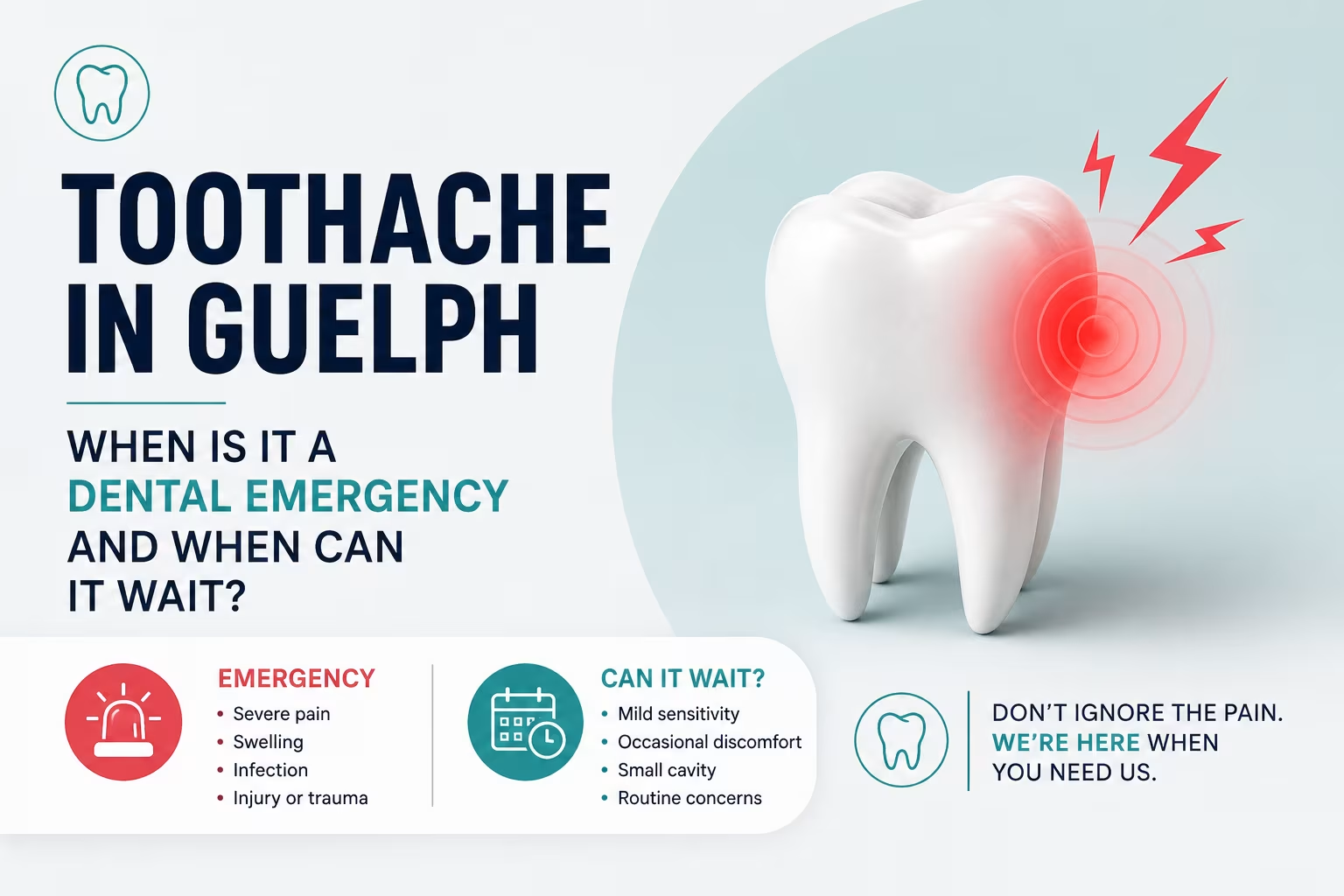
A toothache can begin as mild sensitivity and become difficult to ignore. For some people, the pain appears suddenly. For others, it gradually becomes stronger over several days.
You might notice pain while chewing, sensitivity when drinking something cold, a constant throbbing sensation, discomfort that wakes you during the night, or swelling around a tooth.
When that happens, an important question is:
“Can my toothache wait, or do I need an emergency dentist?”
The answer depends on the cause, severity, duration, and other symptoms accompanying the pain.
Some minor sensitivity may not require emergency treatment. Severe pain, facial swelling, dental trauma, or symptoms of infection may require much faster attention.
If you are experiencing a toothache in Guelph, understanding the possible causes and warning signs can help you decide what to do next.
Why Does My Tooth Hurt?
Tooth pain is a symptom rather than a diagnosis.
A tooth can hurt for many different reasons, and the location or intensity of the pain does not always reveal exactly what is happening.
Possible causes include:
- Tooth decay
- Dental cavities
- Cracked or fractured teeth
- Loose or damaged fillings
- Dental infection
- Dental abscess
- Inflamed or infected dental pulp
- Gum disease
- Exposed tooth roots
- Tooth sensitivity
- Teeth grinding or clenching
- Dental trauma
- Wisdom tooth problems
- Problems with a crown or other restoration
- Food trapped around a tooth or gum
Because several dental conditions can produce similar symptoms, persistent tooth pain should be professionally assessed rather than self-diagnosed.
When Is a Toothache a Dental Emergency?
Not every toothache requires immediate emergency treatment.
However, certain symptoms suggest that you should seek prompt dental or medical attention.
Contact a dentist promptly if your toothache is:
- Severe
- Persistent
- Becoming progressively worse
- Preventing you from sleeping
- Making it difficult to eat
- Associated with significant swelling
- Accompanied by pain when biting
- Related to a broken or damaged tooth
- Associated with a dental injury
- Accompanied by signs of infection
Some situations require emergency medical care rather than waiting for a dental appointment.
Seek immediate medical attention if swelling is affecting your ability to breathe or swallow, is rapidly spreading into the face or neck, or if you have other potentially life-threatening symptoms.
What Does a Throbbing Toothache Mean?
Throbbing dental pain can sometimes occur when inflammation or infection affects tissues within or around a tooth.
The pain may feel:
- Pulsating
- Constant
- Deep
- Difficult to pinpoint
- Worse when lying down
- More noticeable at night
Possible causes can include significant decay, inflammation of the dental pulp, infection, or an abscess.
However, symptoms alone cannot confirm the diagnosis.
A dentist may need to examine the tooth, test it, and take dental X-rays to determine what is causing the pain.
Why Does My Tooth Hurt at Night?
Many patients notice that tooth pain feels worse when they are trying to sleep.
There can be several reasons for this.
When you are lying down and there are fewer distractions, dental discomfort may become more noticeable. Certain types of inflammation can also produce persistent pain that becomes particularly difficult to ignore at night.
Nighttime tooth pain may be associated with:
- Deep tooth decay
- Pulp inflammation
- Dental infection
- Cracked teeth
- Teeth grinding
- Wisdom tooth problems
If a toothache repeatedly wakes you from sleep, arrange a dental assessment rather than relying on temporary pain relief night after night.
Why Does My Tooth Hurt When I Bite?
Pain when biting or chewing can occur for several reasons.
Possible causes include:
- Cracked tooth
- Dental infection
- Inflamed tissues around the tooth
- Damaged filling
- Loose restoration
- Trauma
- Problems with the tooth's supporting tissues
- A restoration that affects the bite
Sometimes the pain occurs only when pressure is applied to a specific part of the tooth.
A cracked tooth, for example, may not always cause constant pain.
If biting repeatedly causes sharp or significant discomfort, avoid chewing on the affected side and arrange a dental examination.
Why Is My Tooth Sensitive to Cold?
Brief sensitivity to cold does not always indicate a dental emergency.
Possible causes of sensitivity include:
- Exposed dentin
- Gum recession
- Tooth wear
- Enamel erosion
- Tooth decay
- Cracked teeth
- Recent dental treatment
- Whitening-related sensitivity
The duration of the discomfort can matter.
Sensitivity that disappears quickly may have a different cause from pain that continues long after the cold stimulus has been removed.
If sensitivity is new, persistent, worsening, or associated with spontaneous pain, ask your dentist to evaluate the tooth.
Why Is My Tooth Sensitive to Hot Foods or Drinks?
Sensitivity to heat can also occur when a tooth is damaged or inflamed.
If hot food or drinks repeatedly trigger significant or lingering pain, particularly when the tooth also hurts spontaneously, professional assessment is appropriate.
Do not rely on temperature sensitivity alone to diagnose the problem.
Different dental conditions can produce overlapping symptoms.
Can a Cavity Cause Severe Tooth Pain?
Yes.
Early tooth decay may produce few or no noticeable symptoms.
As decay progresses deeper into a tooth, you may begin to experience:
- Sensitivity
- Pain when eating sweets
- Cold sensitivity
- Pain while chewing
- Spontaneous toothache
- Lingering discomfort
If decay reaches or significantly affects the dental pulp, more extensive treatment may be required.
This is one reason routine dental examinations are important: cavities are often easier to manage when identified before severe pain develops.
Could My Toothache Be a Dental Infection?
It could be, particularly if the toothache is accompanied by other symptoms.
Possible signs associated with dental infection include:
- Persistent or severe pain
- Throbbing discomfort
- Gum swelling
- Facial swelling
- Tenderness when biting
- Bad taste in the mouth
- Drainage
- Fever
- A swollen area near a tooth
- Difficulty opening the mouth
Dental infections require professional assessment.
Treatment depends on the source and severity of the infection.
What Is a Dental Abscess?
A dental abscess is a localized collection of pus associated with bacterial infection.
An abscess can develop around the root of a tooth or within gum tissues.
Symptoms can include:
- Severe toothache
- Swelling
- Tender gums
- Pain when chewing
- Bad taste
- Drainage
- Fever
- Facial swelling
A dental abscess should not be ignored simply because the pain temporarily decreases.
Professional treatment is usually necessary to address the source of the infection.
Can a Tooth Infection Go Away on Its Own?
The symptoms of a dental infection can sometimes change or temporarily become less noticeable.
That does not necessarily mean the underlying cause has resolved.
For example, pain may decrease if the nerve tissue inside a severely damaged tooth loses vitality, while infection can still remain around the tooth.
Dental infections generally require professional diagnosis and appropriate treatment.
Depending on the condition, treatment may involve:
- Root canal treatment
- Drainage
- Periodontal treatment
- Tooth extraction
- Medication when clinically appropriate
- A combination of treatments
The appropriate option depends on your individual diagnosis.
Do Antibiotics Cure a Toothache?
Not every toothache requires antibiotics.
Antibiotics also do not repair tooth decay, restore a broken tooth, replace a damaged filling, or remove infected tissue from inside a tooth.
When antibiotics are clinically indicated, they may form one part of treatment for certain dental infections.
However, the underlying source often still needs definitive dental treatment.
For that reason, antibiotics should not be viewed as a universal solution for tooth pain.
A dentist must determine the cause and recommend appropriate treatment.
Does Tooth Pain Mean I Need a Root Canal?
Not necessarily.
Many different conditions can cause tooth pain.
Some can be treated with relatively straightforward restorative care, while others may require root canal treatment or extraction.
Root canal treatment may be considered when the dental pulp inside a tooth becomes irreversibly inflamed, infected, or damaged.
Your dentist may use:
- Clinical examination
- Dental X-rays
- Temperature testing
- Percussion or biting tests
- Other diagnostic methods
to determine the condition of the tooth.
A painful tooth does not automatically mean you need a root canal.
Diagnosis comes first.
What Is Root Canal Treatment?
Inside each tooth is a space containing dental pulp, which includes nerves, blood vessels, and connective tissue.
When this tissue becomes severely inflamed or infected, root canal treatment may sometimes be used to preserve the tooth.
During treatment, the affected tissue is removed, the internal root canal system is cleaned and disinfected, and the space is filled and sealed.
Depending on the condition of the tooth, additional restorative treatment may also be recommended afterward.
Whether root canal treatment is appropriate depends on the individual tooth and diagnosis.
When Does a Painful Tooth Need to Be Extracted?
Extraction is not automatically necessary because a tooth hurts.
Dentists generally assess whether a tooth can reasonably be restored before recommending removal.
Extraction may be considered when a tooth is severely damaged, cannot predictably be restored, has certain significant fractures, or has other problems that make removal the appropriate treatment.
Treatment options should be discussed after examination and diagnosis.
Can Wisdom Teeth Cause Toothache?
Yes.
Wisdom teeth can cause pain when they:
- Become impacted
- Partially erupt
- Develop decay
- Become difficult to clean
- Develop inflammation or infection around surrounding gum tissue
- Affect neighbouring areas
Wisdom tooth discomfort is often felt near the back of the mouth.
You may also notice:
- Gum swelling
- Jaw discomfort
- Difficulty chewing
- Bad taste
- Tenderness behind the last molar
Persistent or worsening wisdom tooth pain should be assessed by a dentist.
Dental imaging may be needed to evaluate the position of the wisdom tooth.
Could a Cracked Tooth Be Causing My Pain?
Yes.
Cracked teeth can produce unusual symptoms.
You may experience:
- Sharp pain when chewing
- Pain when releasing your bite
- Cold sensitivity
- Intermittent discomfort
- Pain that seems difficult to locate
Some cracks are visible, while others can be difficult to detect.
Treatment depends on where the crack is located, how far it extends, and how much healthy tooth structure remains.
If you suspect a cracked tooth, avoid chewing hard foods on that side and arrange a dental assessment.
Can Teeth Grinding Cause Tooth Pain?
Grinding or clenching your teeth can contribute to:
- Tooth sensitivity
- Jaw discomfort
- Muscle soreness
- Headaches
- Tooth wear
- Cracked or damaged teeth
- Stress on existing restorations
Some people grind their teeth during sleep without realizing it.
If you regularly wake with jaw discomfort, headaches, or tooth sensitivity, discuss these symptoms with your dentist.
Can Gum Problems Feel Like a Toothache?
Yes.
Pain that appears to come from a tooth can sometimes involve surrounding gum tissues.
Gum-related discomfort may occur because of:
- Gingival inflammation
- Periodontal disease
- Food trapped beneath the gum
- Localized infection
- Gum recession
- Trauma to the gum tissue
A dental examination can help determine whether your symptoms originate from the tooth itself, the surrounding gums, or another structure.
Can Sinus Problems Cause Tooth Pain?
Sometimes.
The roots of the upper back teeth are located close to the maxillary sinus.
Sinus inflammation or pressure can sometimes create discomfort that feels like it is coming from the upper teeth.
However, dental infections can also cause pain in the same area.
If you are uncertain whether your symptoms are dental or sinus-related, professional assessment can help identify the likely source.
What Can I Do for Tooth Pain Before Seeing a Dentist?
Temporary measures may make you more comfortable while waiting for professional care.
Rinse Gently With Warm Water
A gentle rinse can help clean the area around the painful tooth.
Floss Carefully
If food is trapped between teeth, gentle flossing may remove the source of irritation.
Do not aggressively force floss into painful or swollen gum tissue.
Avoid Chewing on the Painful Side
Reduce pressure on the affected tooth until it has been evaluated.
Avoid Extreme Temperatures
If the tooth is sensitive, very hot or very cold foods may trigger additional discomfort.
Use a Cold Compress for Swelling From Trauma
A cold compress applied externally against the cheek may help with swelling associated with an injury.
Use Over-the-Counter Medication Appropriately
If you normally can take over-the-counter pain medication safely, follow the product directions or advice from an appropriate healthcare professional.
Medication can temporarily reduce discomfort but does not diagnose or repair the underlying dental problem.
What Should You NOT Do for a Toothache?
Some home remedies can cause more harm than good.
Avoid:
- Putting aspirin directly against the tooth or gums
- Applying household chemicals to the tooth
- Trying to drain an abscess yourself
- Attempting to drill or repair the tooth
- Using household glue on dental restorations
- Taking someone else's prescription medication
- Ignoring increasing facial swelling
- Delaying professional care because pain temporarily improves
Home care should only be considered temporary support until the underlying problem can be assessed.
Can I Wait Until Tomorrow to See a Dentist?
It depends on your symptoms.
A mild sensitivity that occurs only occasionally may not require an emergency appointment.
However, seek prompt dental advice if you have:
- Severe pain
- Persistent pain
- Rapidly worsening symptoms
- Facial or gum swelling
- Dental trauma
- A broken tooth with significant pain
- Signs of infection
- Difficulty eating because of pain
If symptoms involve difficulty breathing or swallowing, rapidly spreading facial or neck swelling, uncontrolled bleeding, or another potentially life-threatening condition, seek emergency medical care.
Should I Go to the Hospital for a Toothache?
Most isolated toothaches are best assessed by a dentist because definitive treatment usually requires dental care.
A hospital emergency department may help manage serious medical complications but may not be able to provide definitive treatment for the affected tooth.
However, seek emergency medical care if you have:
- Difficulty breathing
- Difficulty swallowing
- Significant facial, jaw, throat, or neck swelling
- Rapidly spreading swelling
- Severe facial trauma
- Uncontrolled bleeding
- Loss of consciousness
- Other serious systemic symptoms
Do not wait for a routine dental appointment if your airway or general health may be at risk.
What Happens at a Toothache Appointment?
Your dentist's first priority is determining why the tooth hurts.
An appointment may involve:
1. Reviewing Your Symptoms
Your dentist may ask:
- When did the pain start?
- Is the pain constant or intermittent?
- What triggers it?
- Does cold cause pain?
- Does heat cause pain?
- Does biting hurt?
- Does the pain wake you at night?
- Have you noticed swelling?
- Has the tooth been injured?
Your answers provide important diagnostic information.
2. Examining the Tooth
The dentist will examine the painful area, surrounding teeth, gums, restorations, and other relevant oral structures.
3. Dental X-Rays When Needed
Dental X-rays may help identify:
- Tooth decay
- Infection around a root
- Bone changes
- Impacted teeth
- Problems beneath existing restorations
- Other conditions that cannot be fully assessed visually
4. Additional Dental Tests
Depending on the symptoms, the dentist may perform tests to evaluate how the tooth responds to temperature, pressure, biting, or tapping.
5. Diagnosis and Treatment Plan
After identifying the likely cause, your dentist can explain the findings and appropriate treatment options.
How Is a Toothache Treated?
There is no single treatment for every toothache.
Treatment depends entirely on the diagnosis.
Possible treatment can include:
- Dental filling
- Replacement or repair of a restoration
- Dental crown
- Root canal treatment
- Periodontal treatment
- Wisdom tooth treatment
- Tooth extraction
- Treatment of dental trauma
- Management of tooth sensitivity
- Other dental procedures based on the condition
This is why simply treating the pain without determining the cause is not enough.
Why You Shouldn't Wait Until Tooth Pain Becomes Severe
Some dental problems are easier to manage when identified early.
For example, a relatively small area of decay may initially require a simpler restoration.
If the condition progresses deeper into the tooth, treatment can become more complex.
Similarly, a damaged restoration or cracked tooth may worsen when repeatedly exposed to chewing forces.
You do not need to wait until the pain becomes unbearable before contacting a dentist.
Recurring or worsening symptoms are a reason to arrange an assessment.
How Can You Reduce the Risk of Future Toothaches?
Not every toothache can be prevented, but good preventive care can reduce the risk of many common dental problems.
Helpful habits include:
- Brush twice daily with fluoride toothpaste
- Clean between your teeth regularly
- Attend dental examinations based on your dentist's recommendations
- Have professional dental cleanings as advised
- Address cavities before they become larger
- Replace damaged restorations when necessary
- Avoid chewing ice or extremely hard objects
- Wear a mouthguard during appropriate sports
- Discuss grinding or clenching with your dentist
- Do not ignore recurring sensitivity or discomfort
Prevention is generally easier than dealing with a dental problem after severe pain develops.
Toothache Treatment in Guelph
If you are experiencing tooth pain in Guelph, the most important step is determining what is causing it.
Wellington Dental Clinic provides dental assessment and treatment for patients with toothaches and other urgent dental concerns.
Our clinic is located at:
Wellington Dental Clinic
86 Gordon St Unit-D
Guelph, ON N1H 4H6
Canada
Depending on your condition, your dental assessment may involve examination, diagnostic imaging, discussion of treatment options, and appropriate dental treatment based on the diagnosis.
If your toothache is severe or worsening, contact the clinic and clearly describe your symptoms when requesting an appointment.
Frequently Asked Questions About Toothaches
Is a toothache considered a dental emergency?
It can be. Severe, persistent, or worsening tooth pain—particularly when accompanied by swelling, infection, trauma, or significant difficulty eating or sleeping—may require prompt dental assessment.
How long should I wait before seeing a dentist for tooth pain?
Persistent, recurring, or worsening tooth pain should be evaluated. Severe pain, significant swelling, trauma, or signs of infection warrant more urgent attention.
Why is my toothache worse at night?
Dental pain may become more noticeable when you lie down and have fewer distractions. Persistent nighttime tooth pain can also occur with significant dental inflammation or infection and should be evaluated.
Why does my tooth hurt when I bite?
Possible causes include a cracked tooth, infection, damaged restoration, inflammation around the tooth, or other structural problems. A dental examination is needed to determine the cause.
Can a toothache go away without treatment?
Symptoms can sometimes temporarily improve, but this does not necessarily mean the underlying dental problem has resolved. Persistent or recurring tooth pain should be assessed.
Does throbbing tooth pain mean I have an infection?
Throbbing pain can occur with inflammation or infection, but symptoms alone cannot confirm the diagnosis. A dentist needs to examine the tooth.
Does every toothache need a root canal?
No. Toothaches have many possible causes. Root canal treatment is only one potential treatment and is recommended when clinically appropriate after diagnosis.
Can an emergency dentist treat severe tooth pain?
An emergency dental appointment can be used to assess the source of severe tooth pain and determine appropriate treatment based on the diagnosis.
Can I take antibiotics for tooth pain?
Antibiotics are not appropriate for every toothache and should only be used when prescribed for a clinical indication. They do not repair decay, cracked teeth, or damaged restorations.
What should I do if my toothache comes with facial swelling?
Contact a dental professional promptly. If swelling is rapidly increasing, spreading into the face or neck, or affecting breathing or swallowing, seek emergency medical attention.
Can I get a same-day appointment for tooth pain in Guelph?
Appointment availability varies. If you have severe tooth pain, contact Wellington Dental Clinic as early as possible, explain your symptoms, and ask about current urgent or same-day appointment availability.
Have a Toothache in Guelph?
A toothache is your body's way of telling you that something needs attention.
The cause may be relatively minor, or the pain may indicate a dental condition that requires prompt treatment.
The only reliable way to know is to have the problem assessed.
If you have persistent tooth pain, pain when chewing, nighttime toothache, sensitivity, swelling, or another dental concern, contact Wellington Dental Clinic in Guelph to discuss your symptoms and appointment availability.
Wellington Dental Clinic
86 Gordon St Unit-D
Guelph, ON N1H 4H6
Canada
Do not wait for manageable tooth pain to become unbearable before seeking professional advice. Earlier assessment can help identify the cause and determine the most appropriate treatment for your oral health.
This article provides general educational information and is not intended to diagnose a dental condition or replace professional dental or medical advice. If you experience difficulty breathing or swallowing, rapidly spreading facial or neck swelling, uncontrolled bleeding, or another potentially life-threatening condition, seek emergency medical care.