A dental screening notice from school can be easy to overread. It may look official enough to feel like a full dental check, but it serves a narrower purpose.
During an Ontario school dental screening, a public-health dental hygienist does a quick visual check for signs that may need follow-up. That can be useful, especially when a child has not seen a dentist recently.
The screening still leaves important questions unanswered. It does not provide the same level of assessment as a complete dental exam, and it does not tell a parent whether treatment is needed.
The wording on the notice should guide what happens next. A referral means the finding should be checked in a dental office. A clear screening result means no concern was flagged during that brief check.
Parents can then decide the next step based on the notice, any symptoms their child has mentioned, and when the last full dental exam took place.
What Does an Ontario School Dental Screening Tell Parents?
It tells you whether the public-health dental hygienist saw a visible concern during a brief school-based check.
Wellington-Dufferin-Guelph Public Health describes its school screening as a quick check of students’ teeth. Parents or guardians are notified when the hygienist sees a problem, such as a large cavity.
That makes the screening useful for finding children who may need follow-up, including families who have not recently accessed dental care.
The screening is limited by design. It takes place at school and is intended to identify concerns that can be seen during that brief assessment. It is not the same appointment your child would have in a dental office.
A notice can therefore mean one of several things:
? No visible concern was identified during the screening
? A non-urgent concern was seen and follow-up was recommended
? An urgent dental concern was identified
? The family may receive information about public dental programs or preventive services
? The parent may need to arrange assessment with a dental provider
Read the wording on your child’s notice carefully. The recommended response depends on the finding recorded by the public-health team.
What Does a School Screening Notice Mean?
The notice is a handoff of information, not a complete treatment plan.
A screening result may tell you that something visible needs a closer look. It does not establish the full extent of the problem or tell a dentist what treatment should be completed.
When the Notice Identifies a Concern
Arrange the follow-up recommended on the notice.
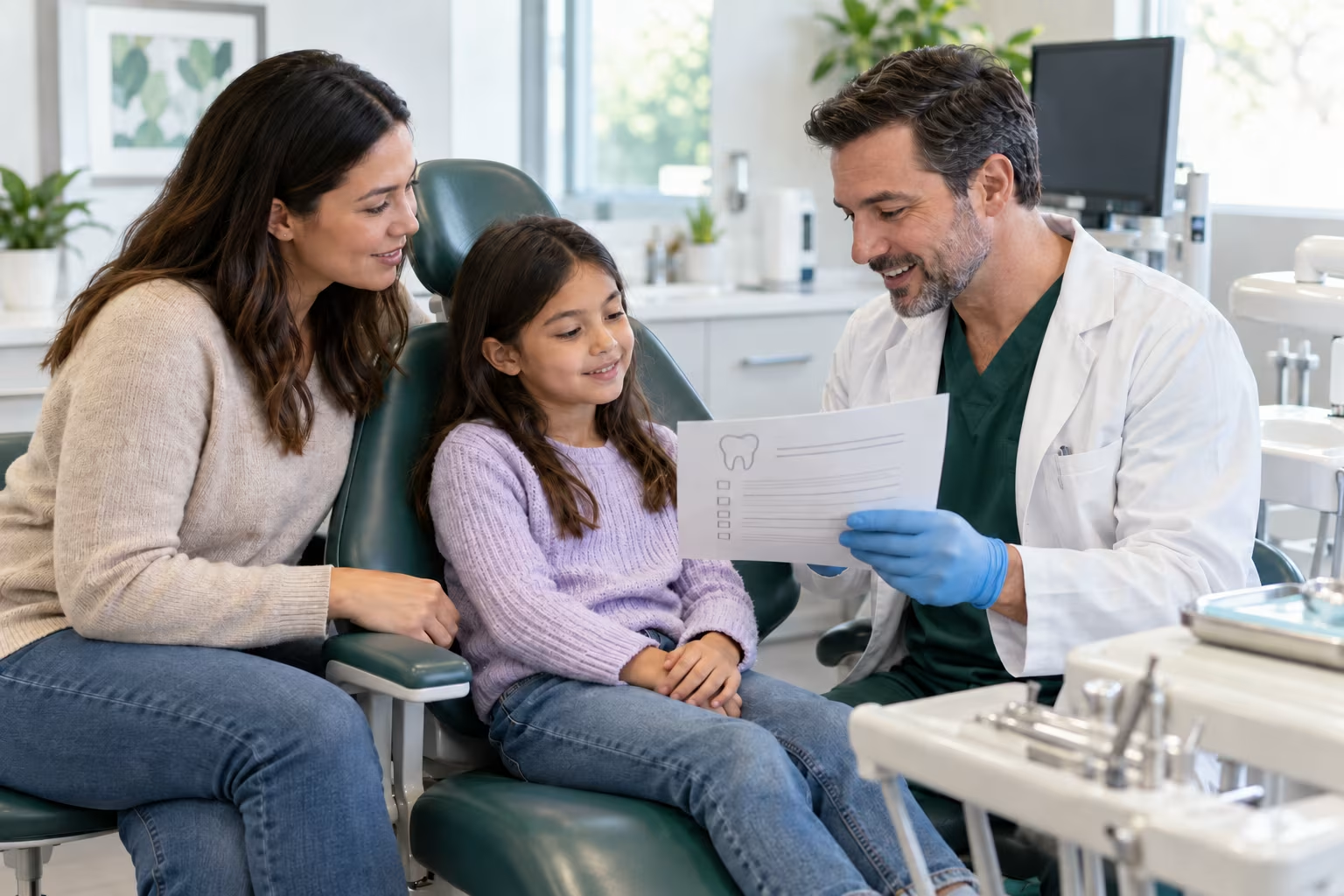
Bring the letter or screening result with you. It gives the dental team useful context about what was observed at school, even though the dentist still needs to perform their own assessment.
Tell the office about any symptoms your child has had, including pain, sensitivity, swelling, difficulty eating, bleeding, or a recent dental injury.
When the Notice Does Not Identify a Concern
Keep the result in context.
A clear screening result means the hygienist did not identify a concern that triggered follow-up during that school check. It does not replace your child’s regular dental care or confirm that every surface of every tooth is free from disease.
Continue with the examination schedule recommended by your child’s dental provider.
Dental Screening vs Exam: What Changes at a Dental Office?
The scope changes considerably.
A school screening is designed to identify visible oral-health concerns efficiently in a school setting. A complete exam gives the dentist more information to assess the child’s mouth and decide what, if anything, needs care.
|
School dental screening |
Complete dental exam |
|
Conducted through public health at school |
Conducted by a dentist in a dental setting |
|
Quick visual check |
More detailed assessment of the teeth, gums, mouth, and relevant history |
|
Flags visible concerns for follow-up |
Evaluates findings and supports diagnosis and treatment planning |
|
Does not provide the same diagnostic work-up as a full dental visit |
May include additional diagnostic information when clinically indicated |
|
May lead to a referral or recommendation for care |
Can lead to monitoring, preventive care, treatment, or referral based on the findings |
This dental screening vs exam distinction is important when a parent receives a letter about a possible cavity. The letter tells you why a closer assessment is appropriate. The dentist determines what is present and what care is recommended.
At a complete dental examination, the dentist can review the concern alongside the child’s history and current oral-health findings.
What Can a School Dental Checkup Miss?
A school screening cannot provide all of the information available during a complete dental exam.
The phrase school dental checkup is often used casually by parents, but Ontario’s school program is a screening service. That difference in scope is worth keeping clear.
Some dental problems are difficult to assess through visual screening alone. For example, decay can develop in areas that are hard to see directly. A dentist may also need information about symptoms, previous treatment, tooth development, gum health, or other findings before reaching a clinical conclusion.
Dental X-rays are another distinction. They are not part of a routine school screening. In a dental office, a dentist may prescribe radiographs when they are clinically justified and the images are expected to provide information needed for care.
A school result should therefore be read as a screening result. It can identify a reason to investigate further without trying to answer every clinical question.
Public Health Ontario notes that oral-health screening in Ontario schools is part of the province’s public-health framework. The program supports community oral-health screening and surveillance, while individual dental care still requires assessment in the appropriate clinical setting.
What Happens After a Guelph School Dental Screening Finds a Concern?
The next step is usually a dental assessment or the follow-up direction provided by Public Health.
A Guelph school dental screening result is useful to bring with you because it shows what prompted the referral. The dental office still needs enough information to assess the child independently.
A typical follow-up may involve:
-
Reviewing the screening notice. The team can see what concern was recorded and whether Public Health indicated urgency.
-
Taking a relevant history. Tell the dentist about symptoms, recent dental care, medical conditions, medications, or injuries that may affect the assessment.
-
Examining the area. The dentist assesses the tooth or area identified at school and the surrounding oral structures as appropriate.
-
Gathering more information when needed. This may include radiographs or other diagnostic records when clinically indicated.
-
Discussing the findings. The dentist explains what was found and what options are appropriate.
-
Planning follow-up care. Depending on the assessment, this may involve monitoring, preventive care, restorative treatment, or referral.
A screening letter does not predetermine treatment. A visible area that looks suspicious during a school check still needs professional assessment before a treatment decision is made.
Does a Clear Screening Result Mean No Dental Visit Is Needed?
No. A clear school screening and an up-to-date dental examination answer different questions.
The screening asks whether the public-health hygienist sees a concern that should be flagged during that brief check. Your child’s ongoing dental care considers their individual oral health over time.
The Ontario government’s dental care guidance explains that public health units provide routine school dental screening and may notify parents when emergency treatment appears to be needed. The same provincial guidance also directs families to dental programs when access to treatment is a concern.
Keep your child’s regular dental appointments according to the schedule recommended by their dental provider, even when no problem was reported at school.
An Ontario school dental screening can be a useful safety net. It should not become the only dental contact a child has simply because the most recent screening letter did not flag a concern.
Can Parents Opt Out of School Dental Screening Ontario Programs?
Yes. Ontario allows parents or guardians to opt their child out of routine school dental screening.
The notification sent before the screening should explain how to opt out. Provincial guidance says families are generally notified before the public-health visit and can follow the instructions provided by the school or public-health unit.
Parents searching for school dental screening Ontario information should use their local public-health notice for the exact date, grades being screened, and opt-out process. Local schedules can differ.
Opting out does not arrange a dental exam elsewhere. Parents remain responsible for organizing their child’s routine dental care and for seeking assessment when symptoms or concerns arise.
What If Cost Makes Follow-Up Difficult?
Tell Public Health or the dental office rather than setting the notice aside.
Ontario has publicly funded and federal dental programs that may help eligible children and families. Eligibility, covered services, and enrolment requirements depend on the program.
Healthy Smiles Ontario provides dental services for eligible children and youth aged 17 and younger. WDG Public Health also advises families about available dental programs and can help eligible families access care.
The Canadian Dental Care Plan may be another source of coverage for eligible families.
Our clinic currently accepts Healthy Smiles Ontario and CDCP, along with other listed government plans. Coverage should be confirmed for the individual child before treatment because eligibility and covered services can vary.
A screening notice can be useful when speaking with a program or dental office, so keep it available.
When Should You Act Before the Screening Follow-Up Date?
Symptoms can change how quickly your child should be assessed.
Do not wait for a routine appointment or another school screening when your child develops significant dental pain, facial or gum swelling, trauma to a tooth, uncontrolled oral bleeding, or another concerning change.
Call a dental office and describe what is happening. The team can determine the appropriate type of appointment based on the symptoms you report.
Same-day care is available for urgent concerns through our emergency dentistry service, subject to appointment availability.
Difficulty breathing or swallowing, rapidly spreading facial or neck swelling, uncontrolled bleeding, or other life-threatening symptoms require emergency medical care.
Where Can Guelph Families Bring a School Screening Result?
Bring the notice to the dental appointment so the dentist can see what Public Health identified.
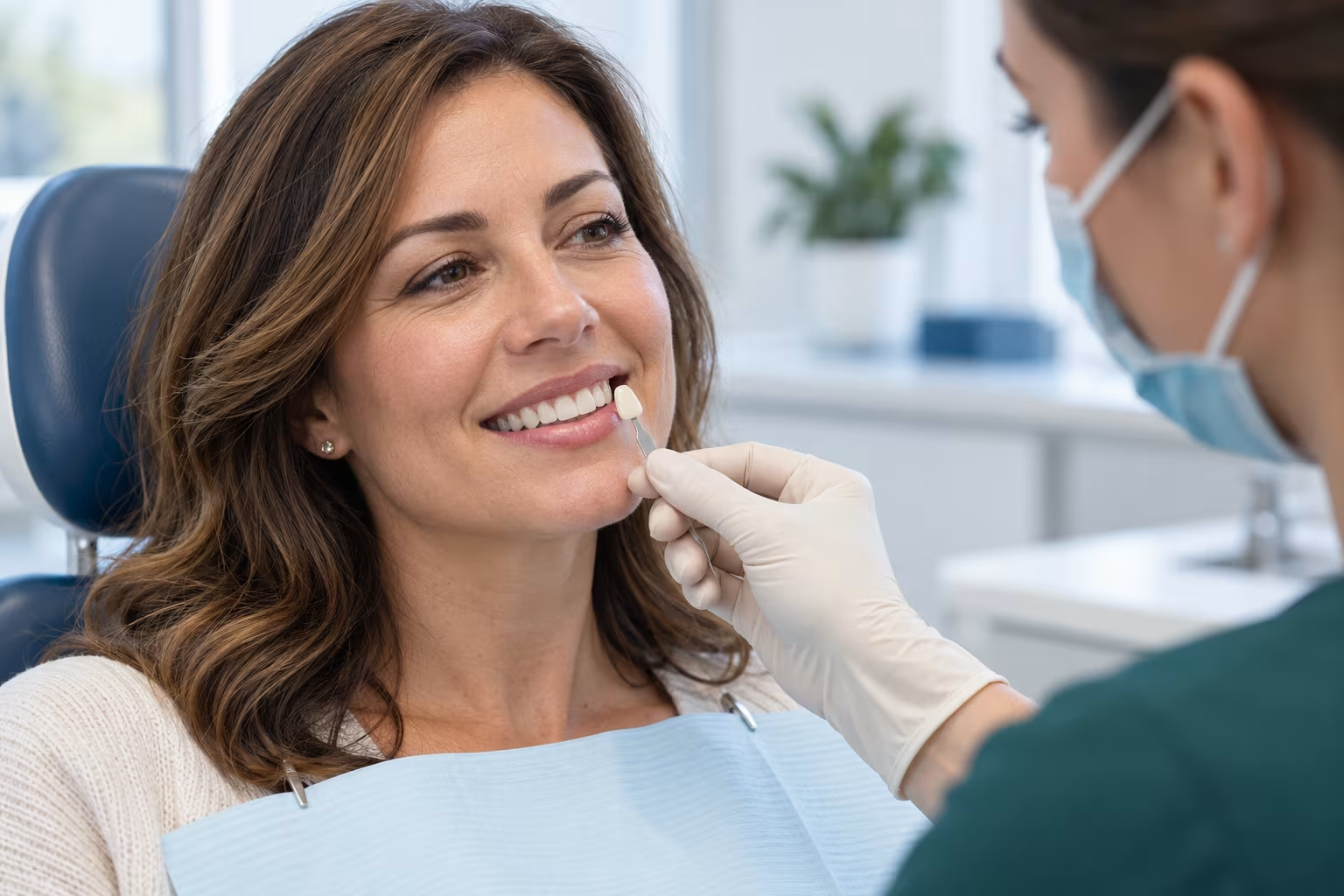
We provide general dental care for children and adults at our downtown Guelph clinic. A screening result can be reviewed during the appropriate dental appointment, and the dentist can assess the area before discussing any treatment or follow-up.
Wellington Dental Clinic is open seven days a week and currently accepts new patients. Morning and evening appointments are available, which can help families arrange care around school and work schedules.
When you book, mention that your child received a school screening notice. That helps us understand why you are requesting the appointment, without assuming what the eventual diagnosis or treatment will be.
A referral letter may point to one tooth or visible concern. Our general dentistry care allows the dentist to assess that finding in the context of the child’s oral health.
Wellington Dental Clinic
86 Gordon St Unit-D
Guelph, ON N1H 4H6, Canada
(226) 314-3614
Frequently Asked Questions
Does an Ontario school dental screening replace my child’s dentist appointment?
No. It is a brief public-health screening designed to identify visible concerns that may need follow-up. A complete dental examination provides a more detailed clinical assessment.
Who performs dental screenings in Guelph schools?
Wellington-Dufferin-Guelph Public Health states that registered dental hygienists visit elementary schools to provide quick checks of students’ teeth.
Will I be told if the hygienist sees a problem?
Yes. WDG Public Health says parents or guardians are notified when the screening identifies a problem, such as a large cavity.
Follow the instructions included with the notice.
Does the school screening include dental X-rays?
Routine school screening is a visual check and does not include dental X-rays. A dentist may prescribe radiographs later when they are clinically indicated.
My child received a letter about a cavity. Does that confirm a cavity?
The letter indicates that the screening found an area that needs follow-up. A dentist still needs to assess the child before making a clinical diagnosis or recommending treatment.
Can my child have a normal screening and still need dental care?
Yes. A brief visual screening cannot provide all of the information gathered during a complete dental examination.
Where can I find official school dental screening Ontario information?
Use Ontario government and local public-health information for current program details. The notice sent by your child’s school or public-health unit is the best source for the local screening date and instructions.
What happens if we do not have dental insurance?
Ask about government dental programs rather than assuming care is unavailable.
Healthy Smiles Ontario and the Canadian Dental Care Plan may help eligible families, depending on the child’s circumstances and program requirements.
Is a school screening the same as a cleaning?
No. A screening is a quick check for oral-health concerns. Professional dental cleaning is a separate preventive service.
Should I bring the screening letter to the dentist?
Yes. Bring the notice or a clear copy. It gives the dental team the public-health finding that led to the recommended follow-up.
What Should You Do With the Screening Notice Now?
Read the result, keep a copy, and follow the direction it gives you.
A notice that identifies a concern deserves dental follow-up. A result with no concern identified still does not replace the routine exam schedule recommended for your child.
We can review a school screening concern through our general dentistry services and determine what assessment is appropriate. Tell us about the screening result when you book so the reason for the visit is clear from the start.
Wellington Dental Clinic
86 Gordon St Unit-D
Guelph, ON N1H 4H6, Canada
(226) 314-3614
This article provides general educational information and is not a diagnosis or a replacement for professional dental or medical advice. A dentist must assess your child before diagnosing a dental condition or recommending treatment. Seek emergency medical care for difficulty breathing or swallowing, rapidly spreading facial or neck swelling, uncontrolled bleeding, or other life-threatening symptoms.