
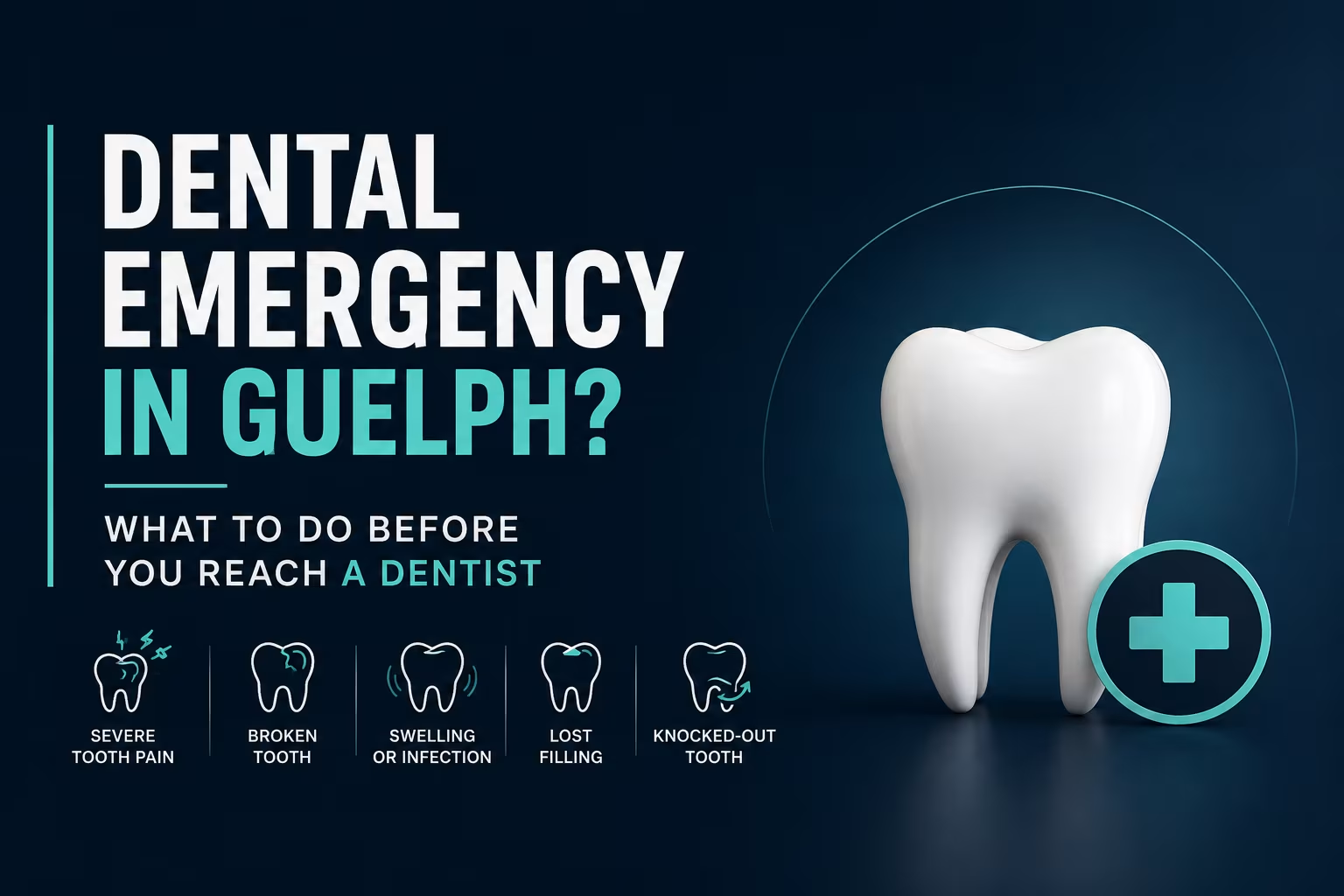
A dental emergency can happen without warning. You might wake up with intense tooth pain, break a tooth while eating, lose a filling, notice sudden swelling around your gums, or experience a dental injury during sports or everyday activities.
When this happens, one of the first questions is usually:
“Do I need an emergency dentist, or can this wait?”
Some dental problems can safely wait for a regular appointment. Others need prompt professional attention to relieve pain, control infection, protect damaged teeth, or reduce the risk of complications.
If you are experiencing a dental emergency in Guelph, understanding what to do before reaching a dentist can help you respond calmly and protect your oral health.
What Is Considered a Dental Emergency?
A dental emergency is generally an oral health problem involving significant pain, trauma, infection, uncontrolled bleeding, or another condition that requires prompt assessment.

Common dental emergencies include:
- Severe or persistent toothache
- A knocked-out permanent tooth
- Broken, cracked, or fractured teeth
- Facial or gum swelling
- Dental abscess or suspected infection
- Loose or partially dislodged permanent teeth
- Lost fillings or crowns causing significant discomfort
- Dental injuries involving bleeding
- Severe pain after dental treatment
- Broken dental restorations
- Problems involving wisdom teeth
- Injuries to the gums, lips, tongue, or other oral tissues
Not every dental problem requires immediate treatment, but symptoms that are severe, rapidly worsening, or associated with significant swelling or trauma should not be ignored.
What Should You Do During a Dental Emergency?
The first step is to assess what happened and contact a dental professional as soon as possible.
While waiting to be evaluated, simple first-aid measures may help protect the affected area.
Avoid trying to diagnose or permanently treat the problem yourself. Dental pain can have several possible causes, and determining the source may require a clinical examination and, in some situations, dental X-rays.
Here is what you can do for several common dental emergencies.
Severe Toothache
A severe toothache is one of the most common reasons people look for an emergency dentist.
Tooth pain can be associated with several conditions, including:
- Tooth decay
- Cracked or fractured teeth
- Damaged fillings
- Dental infections
- Gum problems
- Tooth sensitivity
- Problems involving the dental pulp or nerve
- Wisdom tooth complications
Pain that becomes intense, persistent, throbbing, or interferes with sleeping or eating deserves professional assessment.
What to do
Gently rinse your mouth with lukewarm water.
If food is trapped between your teeth, carefully floss around the affected area.
Avoid placing aspirin or other medication directly against your tooth or gums, as this can irritate or damage oral tissues.
If the pain continues or becomes worse, contact a dentist for an assessment.
Swollen Gums, Face, or Jaw
Dental swelling should be taken seriously, particularly when it appears suddenly or is accompanied by pain.
Swelling may be associated with an infection involving a tooth, gums, or surrounding tissues.
Other possible symptoms can include:
- Throbbing tooth pain
- Tender gums
- Sensitivity when biting
- Bad taste in the mouth
- Pus or drainage
- Fever
- Facial swelling
- Difficulty opening the mouth
A dental infection generally requires professional treatment rather than simply waiting for the discomfort to disappear.
If swelling is rapidly increasing, affects your breathing or swallowing, spreads toward your eye or neck, or is accompanied by serious systemic symptoms, seek emergency medical attention.
Knocked-Out Permanent Tooth
A knocked-out permanent tooth is a time-sensitive dental emergency.
Prompt action can sometimes improve the possibility of saving the tooth.
What should you do?
Pick up the tooth carefully by the crown, which is the part normally visible above the gums.
Avoid touching the root whenever possible.
If the tooth is dirty, gently rinse it without scrubbing or removing attached tissue.
If it can be done safely, the tooth may be gently repositioned into its socket. Do not force it.
If reinsertion is not possible, keep the tooth moist and seek urgent dental care immediately. Suitable storage may include milk or an appropriate tooth-preservation solution.
Do not allow the tooth to dry out.
A knocked-out baby tooth should not normally be placed back into the socket because doing so may damage the developing permanent tooth.
Broken or Chipped Tooth
A tooth can break because of an accident, biting something hard, existing decay, a large restoration, grinding, or other structural weakness.
A small chip may not always require emergency treatment, but a significant fracture can expose sensitive internal tooth structures and cause substantial pain.
What to do
Rinse your mouth gently with lukewarm water.
If you can find the broken piece of tooth, keep it and bring it to your dental appointment.
If there is swelling from trauma, a cold compress placed externally against the cheek may help.
Avoid chewing on the affected side until the tooth has been evaluated.
Depending on the severity and location of the damage, treatment may involve bonding, a filling, crown, root canal therapy, or extraction.
Only a dental examination can determine which treatment is appropriate.
Lost Filling
A filling can become loose or fall out because of wear, recurrent decay, trauma, or damage to the tooth.
Once the filling is lost, the tooth may become sensitive to:
- Cold drinks
- Hot foods
- Sugar
- Pressure
- Chewing
Try to keep the area clean and avoid chewing hard foods on the affected side.
A lost filling should be examined because the underlying tooth may need a new restoration or additional treatment.
Lost or Loose Dental Crown
A crown may loosen or fall off if the cement fails, the restoration becomes damaged, or the underlying tooth changes.
If your crown comes off, keep it somewhere safe and contact your dentist.
Do not use household glue or other non-dental adhesives to reattach it.
The dentist will need to examine both the crown and the underlying tooth before determining whether the existing crown can be recemented or whether another treatment is necessary.
Cracked Tooth
Cracked teeth can sometimes be difficult to identify because the tooth may appear normal from the outside.
Possible symptoms include:
- Pain when chewing
- Sharp pain when releasing your bite
- Sensitivity to cold
- Intermittent tooth pain
- Discomfort that is difficult to locate
The appropriate treatment depends on the location, depth, and severity of the crack.
Early assessment is important because some cracks can progress over time.
Dental Abscess or Infection
A dental abscess is a collection of pus associated with bacterial infection.
It can develop around the root of a tooth or within the gum tissues.
Possible warning signs include:
- Severe toothache
- Swelling
- Tender gums
- Pain when biting
- Bad taste
- Drainage
- Fever
- Facial swelling
Dental infections should not be ignored.
Treatment depends on the source and severity of the infection and may involve drainage, root canal treatment, periodontal treatment, extraction, medication when clinically appropriate, or a combination of approaches.
Antibiotics alone do not necessarily remove the underlying dental cause, which is why professional dental assessment is important.
Wisdom Tooth Pain
Wisdom teeth can cause pain when they are impacted, partially erupted, difficult to clean, infected, or placing pressure on surrounding tissues.
Symptoms can include:
- Pain behind the back molars
- Swollen gums
- Difficulty chewing
- Jaw discomfort
- Unpleasant taste
- Swelling around a partially erupted wisdom tooth
Persistent or worsening wisdom tooth pain should be evaluated by a dentist.
An examination and dental imaging may be recommended to understand the position of the wisdom tooth and determine whether monitoring, treatment of surrounding tissues, or extraction should be considered.
Bleeding After a Dental Injury
Minor bleeding from the gums or soft tissues may occur after an injury.
Apply gentle pressure using clean gauze.
If bleeding is heavy, does not stop despite firm pressure, or is associated with significant facial trauma, seek urgent medical or dental attention.
When Should You See an Emergency Dentist?
Consider seeking prompt dental care if you experience:
- Severe or persistent dental pain
- A knocked-out permanent tooth
- Significant tooth fracture
- Rapidly increasing swelling
- Suspected dental infection
- Trauma causing a loose permanent tooth
- Significant bleeding
- Severe pain when biting
- Dental pain combined with facial swelling
- A lost restoration causing substantial pain
- Worsening symptoms after dental treatment
Even if the pain temporarily improves, the underlying problem may still require treatment.
When Should You Go to a Hospital Emergency Department?
Most tooth-related problems are best evaluated by a dental professional because hospitals may not provide definitive dental treatment.
However, some situations require emergency medical care.
Seek immediate medical attention if you experience symptoms such as:
- Difficulty breathing
- Difficulty swallowing
- Significant swelling involving the face, jaw, throat, or neck
- Severe facial trauma
- Uncontrolled bleeding
- Loss of consciousness
- Serious head injury
- Rapidly worsening symptoms that could threaten your airway or general health
If you are uncertain whether a condition is life-threatening, seeking emergency medical assessment is the safer option.
Can a Dental Emergency Wait Until Tomorrow?
It depends on the problem.
A tiny chip without pain may be able to wait for a scheduled dental appointment.
Severe pain, a knocked-out permanent tooth, rapidly increasing swelling, significant trauma, or uncontrolled bleeding should be treated more urgently.
When you contact a dental clinic, describe your symptoms clearly, including:
- When the problem started
- Where the pain is located
- How severe the pain is
- Whether swelling is present
- Whether an injury occurred
- Whether you have bleeding
- Whether you have fever or other symptoms
This information helps the dental team determine how urgently you may need to be assessed.
What Happens During an Emergency Dental Appointment?
The first priority is determining what is causing the problem.
Your emergency dental visit may include:
1. Discussion of Your Symptoms
Your dentist may ask when the problem began, what triggers the pain, whether symptoms have changed, and whether an injury occurred.
2. Dental Examination
The dentist examines the affected tooth, gums, bite, and surrounding structures.
3. Dental X-Rays When Needed
X-rays may be recommended to evaluate areas that cannot be fully assessed visually, including tooth roots, surrounding bone, decay, infection, or impacted teeth.
4. Diagnosis
Once the cause is identified, your dentist can explain the findings and available treatment options.
5. Emergency Treatment
Depending on the diagnosis, treatment may include:
- Temporary or permanent restoration
- Dental filling
- Crown treatment
- Root canal therapy
- Tooth extraction
- Wisdom tooth treatment
- Management of dental trauma
- Treatment of infection
- Pain management
- Referral for additional care when required
The exact treatment depends on your individual dental condition.
How Can You Reduce the Risk of Dental Emergencies?
Not every dental emergency can be prevented, particularly accidents and unexpected injuries.
However, regular preventive care can help identify some problems before they become urgent.
Helpful habits include:
- Brush your teeth twice daily with fluoride toothpaste
- Clean between your teeth regularly
- Attend routine dental examinations
- Treat cavities and damaged restorations promptly
- Avoid chewing ice and extremely hard objects
- Do not use your teeth to open packaging
- Wear an appropriate mouthguard during contact sports
- Discuss teeth grinding with your dentist
- Seek assessment when recurring pain or sensitivity develops
A small dental problem is often easier to manage before it progresses into severe pain or infection.
Emergency Dental Care in Guelph
If you are experiencing sudden tooth pain, swelling, a broken tooth, a lost restoration, or another urgent dental problem, getting professional advice promptly can help determine what treatment is needed.
Wellington Dental Clinic provides dental care for patients in Guelph and surrounding communities.
Our clinic is located at:
Wellington Dental Clinic
86 Gordon St Unit-D
Guelph, ON N1H 4H6
Canada
Our downtown Guelph location provides access to a range of dental services, including emergency dentistry, general dentistry, restorative treatment, oral surgery, root canal treatment, wisdom tooth care, and other dental services based on individual patient needs.
Patients experiencing a dental emergency can contact Wellington Dental Clinic to discuss their symptoms and appointment availability.
Frequently Asked Questions About Dental Emergencies in Guelph
What qualifies as a dental emergency?
Severe tooth pain, a knocked-out permanent tooth, significant swelling, dental infection, major tooth fractures, uncontrolled bleeding, and traumatic dental injuries are examples of problems that may require urgent assessment.
Can I get a same-day dental appointment in Guelph?
Same-day availability depends on the clinic's schedule and the nature of the emergency. If you have an urgent dental problem, contact Wellington Dental Clinic as early as possible and explain your symptoms so the dental team can advise you about available care.
Should I go to the hospital for tooth pain?
Most isolated dental problems require a dentist for definitive treatment. However, difficulty breathing or swallowing, severe facial or neck swelling, uncontrolled bleeding, serious facial trauma, or other potentially life-threatening symptoms require emergency medical attention.
What should I do if my tooth is knocked out?
Handle a permanent tooth by its crown rather than the root, keep it moist, and seek urgent dental treatment. If you can safely reposition it into the socket without forcing it, this may be appropriate. Do not reinsert a knocked-out baby tooth.
Is facial swelling from a tooth dangerous?
Dental swelling can sometimes indicate infection. Rapidly increasing swelling or swelling associated with difficulty breathing or swallowing requires immediate medical attention.
Can severe tooth pain disappear without treatment?
Pain can sometimes temporarily decrease even though the underlying dental problem remains. Persistent, severe, or recurring tooth pain should be professionally assessed.
Can an emergency dentist remove a painful tooth?
Extraction may be one treatment option when a tooth cannot reasonably be restored or when removal is otherwise clinically appropriate. A dentist first needs to assess the tooth and discuss suitable treatment options.
What should I bring to an emergency dental appointment?
If available, bring identification, relevant insurance or dental-plan information, a list of medications, relevant medical information, and any broken tooth or restoration fragments you have recovered.
Need Urgent Dental Care in Guelph?
Dental pain can make eating, sleeping, working, and concentrating difficult. More importantly, some dental problems can worsen when treatment is delayed.
If you have severe tooth pain, swelling, a broken tooth, a damaged restoration, or another urgent dental concern, contact Wellington Dental Clinic in Guelph to discuss your symptoms and available appointments.
Wellington Dental Clinic
86 Gordon St Unit-D, Guelph, ON N1H 4H6, Canada
Early assessment can help identify the cause of your symptoms and determine the most appropriate next step for protecting your oral health.
This article is intended for general educational purposes and is not a substitute for diagnosis or treatment by a qualified dentist or other healthcare professional.