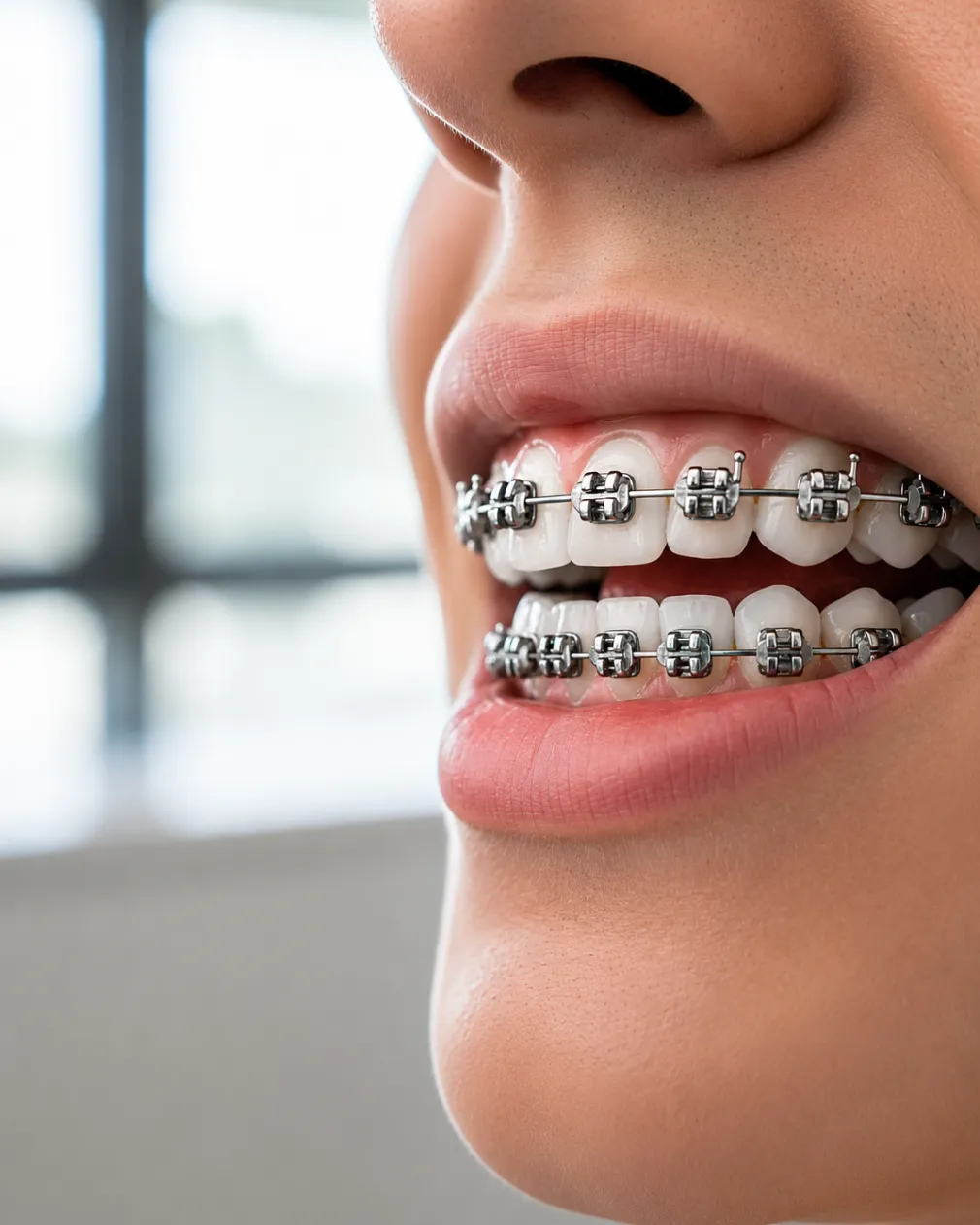
Move toward a straighter, healthier smile with personalized braces care for children, teens, and adults.
Traditional braces use brackets and archwires to apply controlled pressure and gradually move teeth. They can address a range of alignment and bite concerns for children, teens, and adults, but the right treatment depends on an individual assessment.
At Wellington Dental Clinic, we can examine your teeth, jaws, bite, and oral health, explain suitable orthodontic options, and develop a treatment plan based on your needs. Book an appointment to discuss traditional braces in Guelph.
A bracket is bonded to each selected tooth, and an archwire connects the brackets. The wire applies gentle, continuous pressure that guides teeth toward planned positions over time. Small ties or other components may hold the wire in place, depending on the system used.
Regular progress visits allow the dental provider responsible for your orthodontic care to monitor tooth movement, check your teeth and gums, and adjust the appliance when needed. The type of braces, appointment schedule, and total treatment time vary with the condition being treated and your response to care.
Following an assessment, fixed braces may be considered for concerns such as:
Not every alignment or bite concern is treated in the same way. Some patients may need another orthodontic appliance, dental treatment before braces, or coordination with an orthodontic specialist.

Traditional braces can be used at different ages when the teeth, gums, and supporting bone are healthy enough for orthodontic movement. Age alone does not determine candidacy.
Your assessment may consider:
If you are comparing fixed braces with a removable option, read about Invisalign treatment. An examination is still needed to determine which approach is clinically suitable.
The first stage includes a review of your concerns, dental and medical history, teeth, gums, jaws, and bite. Diagnostic records such as photographs, scans, impressions, or X-rays may be recommended when needed for planning. You should receive an explanation of the proposed treatment, alternatives, limitations, estimated timeline, fees, and follow-up requirements before treatment begins.
The teeth are cleaned and prepared before brackets are bonded and connected with an archwire. Instructions for cleaning, eating, and managing early irritation should be provided before you leave.
You will return for scheduled checks and adjustments throughout treatment. Mild pressure or tenderness can occur after braces are placed or adjusted. This usually improves as your mouth adapts. Contact the clinic if pain is severe, does not improve, or is caused by a broken or displaced component.
After active tooth movement is complete, a retainer is commonly used to help maintain the new positions. Retention instructions are individualized, and teeth can shift if the retainer is not worn as directed.
Contact Wellington Dental Clinic for instructions if a bracket becomes loose, a wire breaks or protrudes, or another part of the appliance is damaged. Even when it does not hurt, a broken component may interfere with the planned tooth movement.
Orthodontic wax may temporarily cover a sharp area that rubs the cheek or lip. Do not cut or remove parts of the appliance unless your dental provider specifically instructs you to do so. Seek urgent help for heavy bleeding, significant facial injury, trouble breathing or swallowing, or another serious medical concern.
Fixed braces do not depend on remembering to insert an aligner each day and can provide continuous control of tooth movement. They may be considered for straightforward or more involved alignment and bite concerns, depending on the assessment.
They are visible, require careful cleaning, and involve food and activity precautions. Temporary tenderness and irritation can occur, and brackets or wires can break. Treatment results and timing depend on the original condition, oral health, growth, appointment attendance, appliance care, and individual response.
Everything you need to know about your visit to our Guelph clinic.
An orthodontic assessment can clarify what needs correction, whether traditional braces are suitable, and what alternatives should be considered. Wellington Dental Clinic will review the proposed plan, expected care, fees, and next steps before treatment begins.
Contact Wellington Dental Clinic or
Our dentists are trained across all areas of general dentistry, from routine procedures to emergency care.
We work closely with specialists like orthodontists to ensure comprehensive, tailored treatment.
Our fully licensed team treats children, adults, and seniors at every stage of life.
